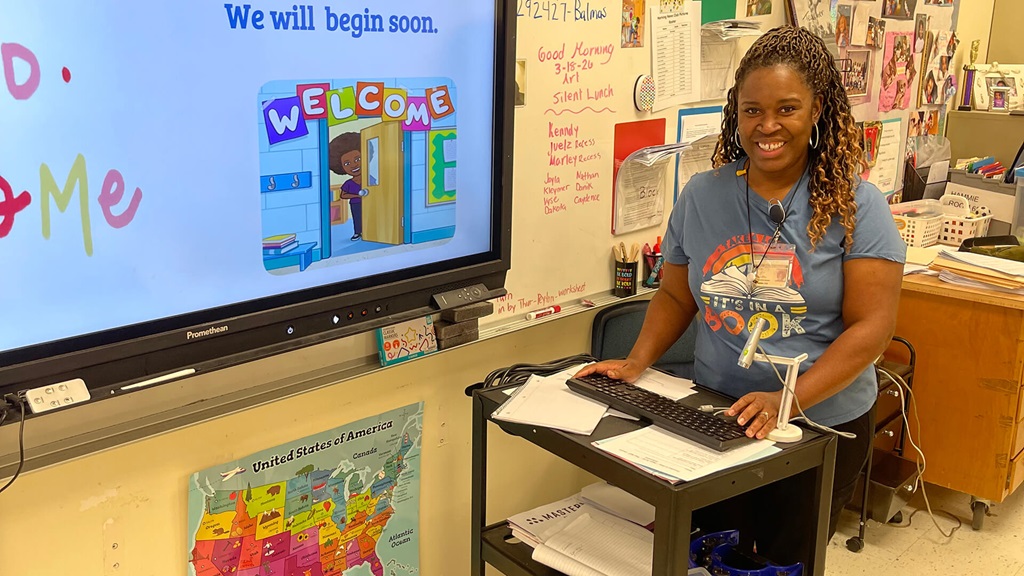
 At 47, Shermeine Hammie was busy with life. A wife, mom of two and fifth-grade teacher, had stayed on top of her mammograms since turning 40. But her first colonoscopy, recommended for average-risk adults starting at age 45, got pushed back.
“When someone called to schedule it, it was the first week of school,” says Shermeine. “I told myself I’d call them back when I could figure out the craziness of school and find time to take a day off.” She meant to reschedule sooner, but life kept moving. She ended up scheduling an appointment in January 2025.
Around that time, Shermeine began to notice changes in her bowel habits. She didn’t feel sick and wasn’t missing work, so she brushed off her symptoms as age-related or something she had eaten. Looking back, she also realized she sometimes saw blood, but because she had very heavy periods, she wasn’t always sure where it was coming from. Her bowels also never seemed to feel completely empty.
“I think that’s what really prompted me to sit down that day and call to schedule the colonoscopy,” she says.
When Shermeine finally had her colonoscopy, the news was shocking: Her doctor had found cancer. She had imaging the next day to see whether it had spread. Fortunately, it hadn’t.
Shermeine’s colorectal cancer treatment plan
 Shermeine began treatment with Dr. Laura Musselwhite, a hematologist and medical oncologist at Atrium Health Levine Cancer, and met with Dr. Joshua Hill, a surgical oncologist at Levine Cancer, to discuss her options. She was diagnosed with locally advanced rectal cancer, a type of colorectal cancer that develops in the rectum, the final portion of the large intestine.
Shermeine’s treatment began with radiation in February. She went five days a week after school for 28 treatments.
“It wasn’t a long process and radiation wasn’t horrible on my body,” she says.
After radiation, Shermeine had a short break before starting chemotherapy. She received infusions every other week on Mondays, beginning during the final weeks of the school year and continuing through the summer. Her biggest side effect was exhaustion, but she was determined to keep showing up for the moments that mattered most, including her daughter’s senior year events and graduation, her son’s basketball tournaments, and her students’ end-of-year milestones.
“I didn’t miss out on things because of my diagnosis,” she says.
Eventually, Shermeine stepped away from teaching to recover and protect her immune system, but she still made it to her fifth graders’ moving-up ceremony. Coworkers organized a meal train for her family, and 40 friends and relatives joined a colorectal cancer walk in her honor.
“That was a pivotal part of my experience where I felt like people were supporting me,” she says. “I got to see so many survivors at the event.”
After completing chemotherapy, Shermeine had surgery in early October. By then, Hill told her that her tumors had shrunk, thanks to radiation therapy and chemotherapy. Because of the cancer’s location, she needed a robotic abdominal perineal resection, or APR.
“Shermeine did very well with surgery,” says Hill. “The recovery after these surgeries can be difficult, but her spirit and determination moved her forward.”
Today, she says she is grateful for the outcome and for the care she received.
“Dr. Musselwhite, Dr. Hill, my nurse navigators Candace and Joanna and their teams were remarkable,” she says. “The whole experience was unmatched, and I can’t think of anywhere I’d rather be treated than at Levine Cancer.”
Why screening matters earlier than many people think
Shermeine was diagnosed at 47, younger than many people associate with colorectal cancer. But doctors say it’s becoming more common.
“Shermeine was diagnosed younger than we historically expected, but unfortunately, this is becoming increasingly common,” says Musselwhite. “Because of this trend, our U.S. screening guidelines now recommend starting average-risk screening at age 45.”
Hill says colorectal cancer is now the leading cause of cancer-related death in adults under 50. Experts don’t fully understand why rates are rising, but research has linked early-onset colorectal cancer to factors including:
- Obesity
- Sedentary lifestyle
- Alcohol use
- Diets high in processed foods and low in fiber
It’s also important to know that most colon cancers don’t have an identifiable risk factor. “A lot of people skip screening because they feel healthy — and often they are,” says Hill. “But colon cancer can develop without clear risk factors, which is why routine screening is so important.”
Colonoscopies don’t just detect cancer — it can help prevent it by finding and removing precancerous polyps before they turn into cancer. Stool-based screening tests are also an option for some average-risk adults.
“Colorectal cancer is one of the most preventable, but also curable cancers that exists,” says Musselwhite. “The earlier we identify it and take care of it, the better.”
People at average risk should begin screening at age 45. Those with a family history of colon cancer or other known risk factors may need to start earlier — talk with your doctor about the right plan for you.
“Getting a colonoscopy isn’t a fun process, but it’s something that could save your life,” adds Shermeine.
Colorectal cancer symptoms younger adults shouldn’t ignore
Doctors say one of the biggest reasons younger adults get diagnosed later is that they assume symptoms are caused by something less serious, such as hemorrhoids.
Consistent blood in the stool isn’t normal and should always be checked by a primary care doctor or gastroenterologist, regardless of age, says Hill and Musselwhite. Other warning signs can include:
- Unexplained anemia
- Unexplained weight loss
- Abdominal pain or cramping
- Bloating or feeling full
- Persistent diarrhea or constipation
- Changes in bowel movements, such as the shape, frequency or size
- Changes in appetite
- Excessive fatigue
- Pain or discomfort during bowel movements
“If symptoms continue, then a colonoscopy should be performed no matter the person’s age,” says Hill.
For Shermeine, the message is simple: Even when life is busy and you feel mostly fine, don’t put off screening. It could save your life.
Learn more about colorectal cancer screenings and treatment at Levine Cancer.


