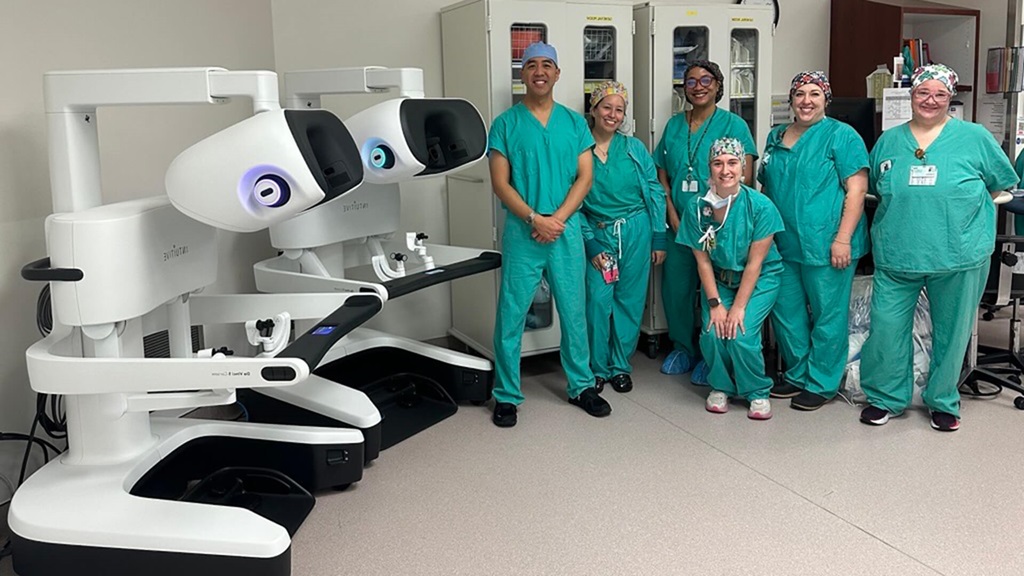
For many women, the idea of gynecologic surgery can feel overwhelming. It’s natural to have questions about your options, what recovery may look like and whether newer approaches like robotic surgery are safe.
Top things to know
- Many gynecologic conditions can be treated with minimally invasive surgery, using smaller incisions to reduce pain, scarring and downtime. These approaches are commonly used for issues like fibroids, endometriosis, ovarian cysts, abnormal bleeding, pelvic pain and some causes of infertility.
- Robotic-assisted surgery is a minimally invasive option guided entirely by your surgeon, offering greater precision for both routine and complex procedures.
- Your care plan is personalized from start to finish, with most patients going home the same day and returning to normal activities sooner than with traditional surgery.
At Atrium Health Women’s Care, many common gynecologic conditions can be treated using minimally invasive and robotic techniques. These approaches are designed to reduce pain, limit scarring and support a smoother recovery, so you can return to your routine sooner.
Dr. Mitch Dizon, a minimally invasive gynecologic surgeon at Atrium Health Women’s Care Urogynecology and Pelvic Surgery, shares how these techniques work and what patients can expect.
Less invasive approach, more meaningful benefits
Minimally invasive gynecologic surgery uses small incisions and specialized instruments to treat conditions affecting the pelvic organs. Instead of a large abdominal incision, surgeons operate through a few tiny openings and use a camera to guide the procedure with precision.
Because the body experiences less trauma, recovery often feels very different from traditional surgery.
“For many patients, this means less pain, smaller scars and a quicker return to normal activities,” Dizon says.
Minimally invasive techniques are commonly used to treat benign gynecologic conditions such as uterine fibroids, endometriosis, ovarian cysts, abnormal uterine bleeding, pelvic pain and some causes of infertility. In many cases, they can be used for both routine and more complex procedures.
“Our goal is to use the least invasive option possible while still providing safe, effective care,” Dizon says.
Understanding robotic-assisted surgery
Robotic-assisted surgery is one type of minimally invasive surgery, and it often raises questions.
Despite the name, the surgeon is always in control.
During the procedure, the surgeon sits at a console and guides robotic arms equipped with small instruments and a high-definition 3D camera. The system translates the surgeon’s hand movements into precise, controlled actions.
“It’s important for patients to know that the robot doesn’t operate on its own,” Dizon says. “We’re in full control the entire time. The technology simply allows us to see better and move with greater precision.”
That added precision can be especially helpful for delicate or complex procedures, often resulting in less blood loss, less pain and a faster recovery.
Because minimally invasive approaches require smaller incisions, they can also lead to shorter operating times compared to traditional open surgery. Shorter procedures may mean less time under anesthesia and a smoother experience overall for patients.
Surgeons who specialize in minimally invasive gynecologic surgery complete advanced fellowship training in laparoscopic, hysteroscopic and robotic techniques, which builds extensive experience with these approaches. This training supports precision and confidence in treating both routine and complex conditions.
“Our training allows us to offer advanced surgical options while focusing on safety and outcomes,” Dizon says.
What to expect, from consultation to recovery
Every patient’s care starts with a conversation.
During a consultation, your care team will review your symptoms, medical history, labs and any imaging to understand your condition and walk through your options. Factors like the type of gynecologic condition, the size of the affected area, prior surgery and your overall health all help guide the decision.
“We focus on what’s best for each individual patient,” Dizon says. “That means creating a treatment plan that supports both your health and your quality of life.”
If a minimally invasive procedure is recommended, your care team will guide you through what to expect before, during and after the procedure.
Most procedures are performed under general anesthesia, and many patients can go home the same day.
Recovery is often quicker than with traditional surgery. Many women are back to light activities within a few days, with full recovery depending on the procedure.
Support through every step
Even with less invasive options, surgery can still feel like a big decision. Dizon encourages patients to speak openly about any concerns or hesitation.
“Feeling nervous is completely normal,” Dizon says. “Share your concerns, questions, and anxieties with us. Our goal is to help you understand your condition, recognize your symptoms, and match you with the treatment that best suits your condition, comfort level and lifestyle.”
With the clear information and a care team you trust, you can move forward with minimally invasive surgery feeling confident in your treatment and recovery.
Learn more about minimally invasive gynecologic options available at Atrium Health Women’s Care.


