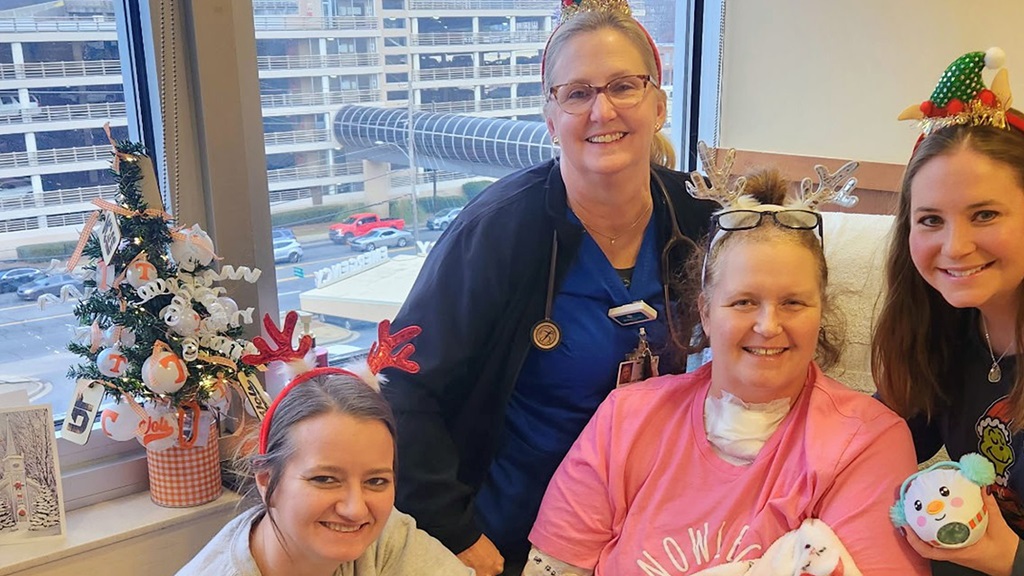
For nearly 30 years, April Walker has cared for patients at Atrium Health Floyd Medical Center. As a respiratory therapist, she is used to helping people through some of their hardest moments. But after experiencing two cerebellar strokes in November, April suddenly found herself on the other side of care.
“I was in the hospital after surgery and asked my husband why I couldn’t stand up,” April says. “That’s when he told me I’d had a few strokes. But he didn’t want that to define me. I was going to fight to recover.”
What followed were months of rehabilitation, determination and support from a care team she says helped her regain both strength and confidence.
Relearning the basics
April spent several weeks recovering in the hospital before transitioning to inpatient rehabilitation, where she participated in three hours of therapy each day. She remembers those early days clearly.
“They gave me my first shower after surgery and helped me relearn everything,” April says. “Putting my shoes on, taking steps around the hall with a walker. They cheered me on the whole time.”
Simple exercises became major milestones. Therapists practiced everyday movements with her and gradually introduced real-world situations, like turning quickly or walking while carrying items. But the road to recovery had its bumps.
“There was one day early on in therapy when I just started crying,” April says. “I hadn’t cried since surgery. My therapist sat and talked with me, gave me a break, and then came back and worked with me. Her patience and support helped me reset.”
Rebuilding strength

Within a week of returning home, April began outpatient physical, occupational and speech therapy at Atrium Health Floyd. At first, she relied on a walker and attended multiple sessions each week.
“Going from walking 10,000 steps a day to nothing was hard,” April says. “But PT has been wonderful. I didn’t believe in physical therapy as much as I do now. It is amazing what they have done for me.”
Her rehabilitation team focused on helping her safely return to daily life. Occupational therapy played a key role in that transition. Amanda Maceikis, an occupational therapist and certified stroke rehabilitation specialist, helped April rebuild strength, coordination and confidence.
“A primary focus at the beginning of her rehabilitation was achieving independence with bathing and dressing,” Maceikis says. “Her strong drive and positive attitude were evident from the start.”
April also worked closely with physical therapist Suzanne Dunn and physical therapist assistant MaraJade (MJ) Spranza, both of whom guided her through months of strength and balance training. Dunn says their work centered on preparing April for the physical demands of returning to the hospital.
“April said from the start that her biggest goal was to return to work,” Dunn says. “She was determined to follow every recommendation if it meant getting back to her team and her patients.”
One of the most important goals was helping April maintain stability on uneven surfaces and in busy environments — situations she would encounter daily as a respiratory therapist.
“We worked on everything she would face in a real shift,” Dunn says. “She needed to be able to navigate hallways with others around her and respond to emergencies.”
Her therapists also pushed her with exercises focused on balance, strength and endurance, including planks, stair work and multitasking drills designed to mimic real-life situations.
As the work grew harder, her therapy team noticed her determination just as much as her progress. Spranza says April didn’t let stress or discomfort slow her down.
“She never missed an appointment,” Spranza says. “She worked just as hard as she would any other day and spread positivity to anyone she talked to.”
April says one of the most meaningful parts of recovery was seeing progress little by little. Today, she walks independently and has completed therapy.
“I liked to joke with them and say, ‘Don’t y’all know I had a stroke?’ But they kept pushing me because they knew what I could do,” April says.
Once April regained her strength and confidence, it became clear she was ready for the next step.
Returning to the work she loves
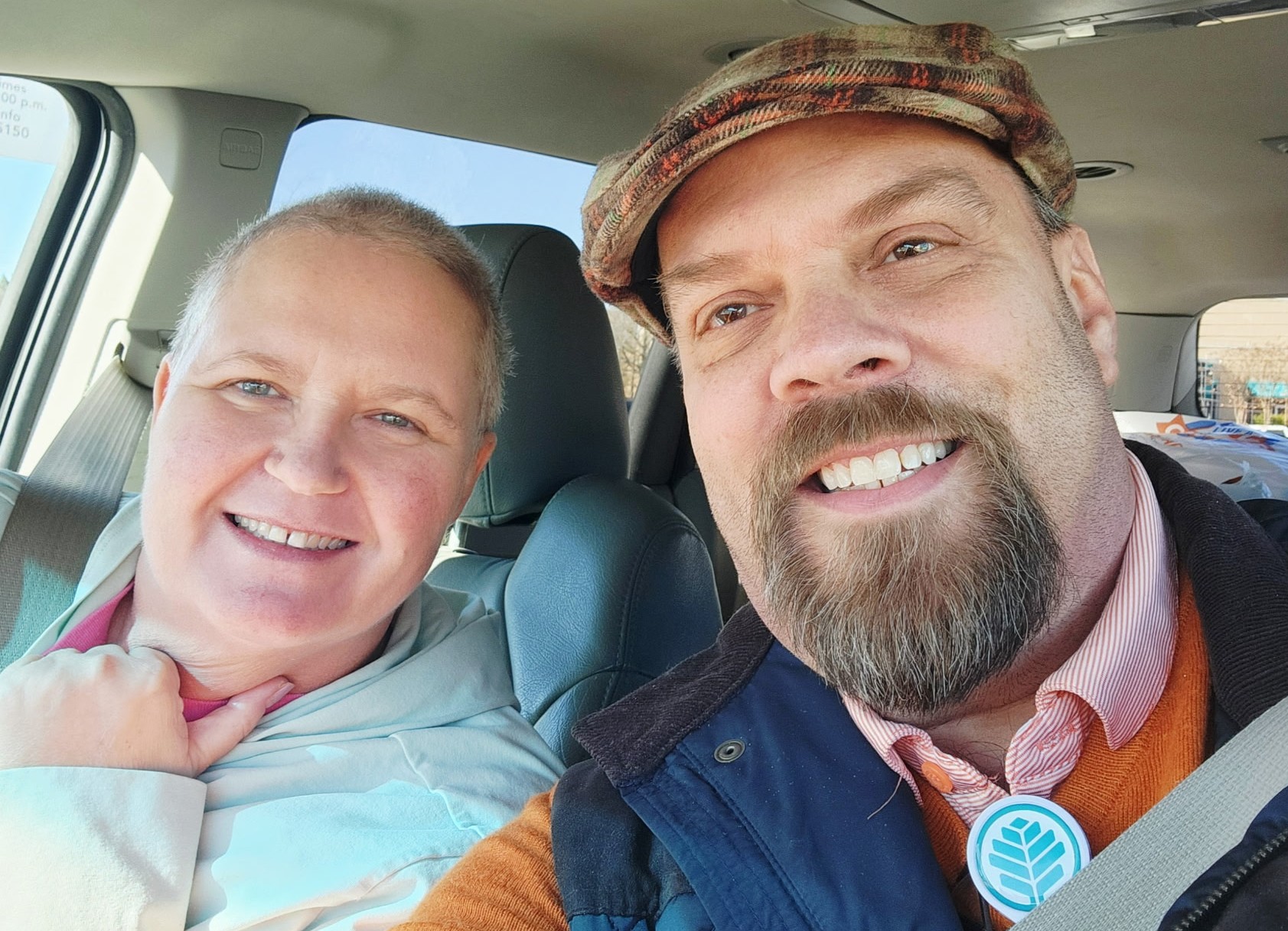
April returned to work in February, just three months after her strokes.
“It was an emotional milestone for me,” April says. “I had a huge support system. I didn’t realize how many people I’d made an impact on until all of this happened, but it meant a lot to be surrounded by this team.”
The experience has also changed the way she cares for patients. During her recovery, April had a tracheostomy, something she now discusses openly with patients who are going through similar experiences.
“Part of my job is removing trachs, and then suddenly I had one,” April says. “Now I understand what patients are feeling in a completely different way.”
Recently, she spoke with a patient recovering from a similar stroke who was frustrated by the slow pace of healing.
“I told him there is an end in sight,” April says. “I said, ‘Look at me. I was just here a few months ago!’”
A message for others
For April, recovery has been about more than regaining strength. It has been about trusting the process, leaning on others and continuing to move forward one step at a time.
“Use all the resources you can and ask all the questions,” April says. “Put in the work because it works. It does get better, but you have to put in your share too.”
Her therapy team echoes that message.
“Every stroke is different,” Spranza says. “You cannot compare yourself to other people. It takes hard work and self-discipline every day to meet your goals. April is a walking miracle, and she radiates the energy of someone who knows life is too precious to be anything but positive.”
Now, as April walks the same hospital halls where she once practiced her own physical therapy laps, she carries a deeper understanding of what healing can look like and the people who help make it possible.
Learn more about stroke care at Atrium Health Floyd.


