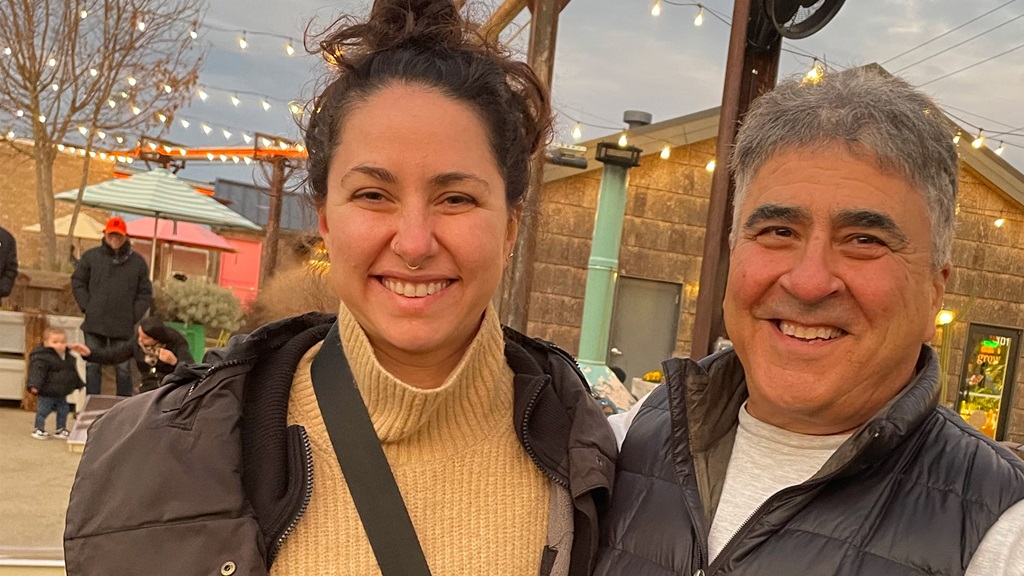
In 2023, Joe Ciotta, now 69, was helping a neighbor with a landscape cleanup on one of his properties when he pulled a muscle in his shoulder.
“I was a plumber for a long time, so I’m used to hard work,” says Joe. “But when it didn’t feel better after a couple of weeks, I went to my primary care physician.”
His primary care provider, Dr. Elisabeth Stoffel, ordered X-rays of Joe’s shoulder. The images showed his shoulder had a strain that would heal on its own — but they also revealed something unexpected: a mass on Joe’s lungs.
Stoffel immediately referred Joe for a CT scan, followed by a PET scan. His care transitioned to Dr. Allison Prinz, a hematologist and medical oncologist at Atrium Health Levine Cancer after a biopsy revealed that Joe had non-small cell adenocarcinoma, a form of lung cancer.
At the time, Joe had no lung cancer symptoms.
“I didn’t have any discomfort or a cough,” he says.
Joe also met with a thoracic surgeon to determine whether he was a candidate for surgery. Prinz recommended a brain MRI to see if the cancer had spread beyond his lungs. After the MRI, Joe got a call from the thoracic surgeon saying he wasn’t a candidate for surgery because the MRI showed a couple of spots in his brain, indicating stage IV cancer.
“Part of my reaction was that I was grateful I hurt my shoulder because that led to discovering the cancer,” he says. “It was kind of a fluke that we found it when we did.”
Joe’s personalized treatment plan for stage IV lung cancer
Routine molecular testing on Joe’s lung tissue biopsy revealed an EGFR exon 19 deletion, a common non-small cell lung cancer mutation that is highly responsive to targeted treatments. In January 2024, he began an oral targeted therapy medication.
“Joe has tolerated it well and he remains on the medication to this day with control of his disease,” says Prinz.
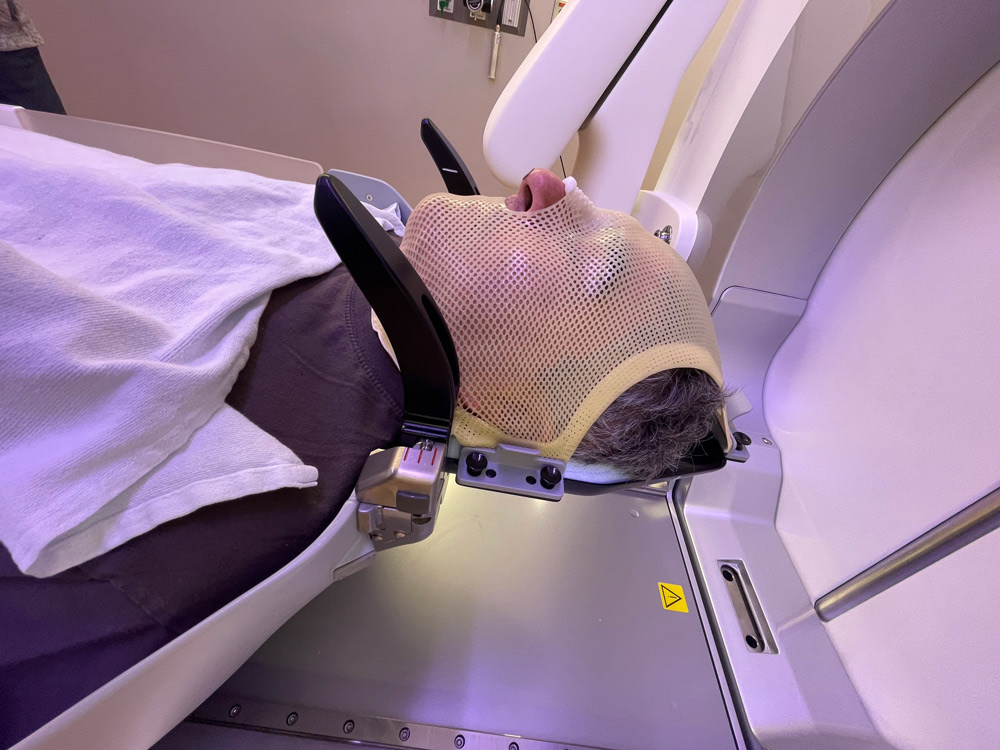
Joe also received Gamma Knife treatment for the brain metastases and later received stereotactic body radiation therapy (SBRT).
“Joe was a good candidate for Gamma Knife because he had a limited number of lesions in his brain,” says Dr. Stuart Burri, a radiation oncologist at Levine Cancer. “Gamma Knife can provide excellent control of the treated areas without significantly affecting neurocognitive function.”
“Dr. Burri and his team made the treatments very human,” says Joe. “They actually played music while I was in the machine during the Gamma Knife procedure. They really took good care of me.”
Joe’s follow-up scans have continued to show encouraging results. There were three spots in his brain and Gamma Knife targeted two of them because they were large enough to treat. The two targeted areas have remained stable or shrunk, and the smaller lesion disappeared.
Scans in the summer of 2024 showed the growth on Joe’s lung had shrunk considerably. In September, he began SBRT and received five treatments over the course of two weeks.
“Joe was a good candidate for SBRT to the lung primarily because, although he had an excellent response to systemic therapy, he did not have a complete response,” says Burri. “Radiation helped consolidate the area of potential residual disease. Joe responded well to treatment, and his last imaging showed no evidence of active disease.”
Joe is grateful for the excellent care he received.
“When you’re done with treatment, they read a poem to you and you get to ring a bell,” says Joe. “It brought tears to my eyes. It was very human and a nice thing they did.”
There are no current plans for further radiation treatment, but Burri says Levine Cancer has advanced treatment options available if Joe needs them in the future, including the only proton center in the Carolinas.
Integrative oncology services to support holistic well-being
Joe’s recovery, both mentally and physically, took time. These days, he’s feeling much better, though he says the experience has changed him.
“Mostly it was the mental rollercoaster,” he says. “I haven’t had any discomfort from the cancer to date. But I don’t have as much energy or feel as strong as I used to.”
Along with his cancer treatments, Joe has also used integrative oncology services through the Department of Supportive Oncology at Levine Cancer, designed to promote wellness and quality of life. One of his favorite integrative oncology services has been massage.
“The therapists are terrific,” he says. “They treat me with a lot of care and empathy.”
Joe has also tried acupuncture, met with a dietitian and worked with a therapist who specializes in supporting cancer survivors.
“It was reassuring that I’m on the right track mentally,” he says.
Joe also has an upcoming appointment for healing touch and is interested in exploring more of Levine Cancer’s supportive services.
“I look forward to checking out the other things they have to offer, like the art classes and music therapy,” he says.
Lung cancer risk factors and new treatment options
Although Joe did not have symptoms before his diagnosis, he did have a family history of cancer. His father was a heavy smoker and died from lung cancer at age 51. Both of Joe’s sisters have had breast cancer and his younger sister passed away in August 2025. His older sister is now cancer-free.
Joe smoked in high school and for a few years afterward, but he cut back in his 20s. After having a heart attack in 2000, he never smoked again.
“I wasn’t a heavy smoker, but for some years in my late teens and early 20s, I approached a pack a day,” he says. “Thankfully, I quit.”
Today, treatment options such as immunotherapy and targeted therapy are helping some patients with stage IV lung cancer live longer with a better quality of life, Prinz says. Research, like the clinical trials conducted at Levine Cancer, has played a major role in expanding treatment options.
“I encourage everyone to let their representatives in Congress know how important it is to support the research that makes these new treatments possible,” says Prinz.
Joe continues to see Prinz every two months for follow-up care. He also gets a brain MRI and CT scan every four months.
“Joe’s sense of humor and positive outlook always brighten my day, whether I see him in the office or in the community,” says Prinz.
Looking ahead with gratitude
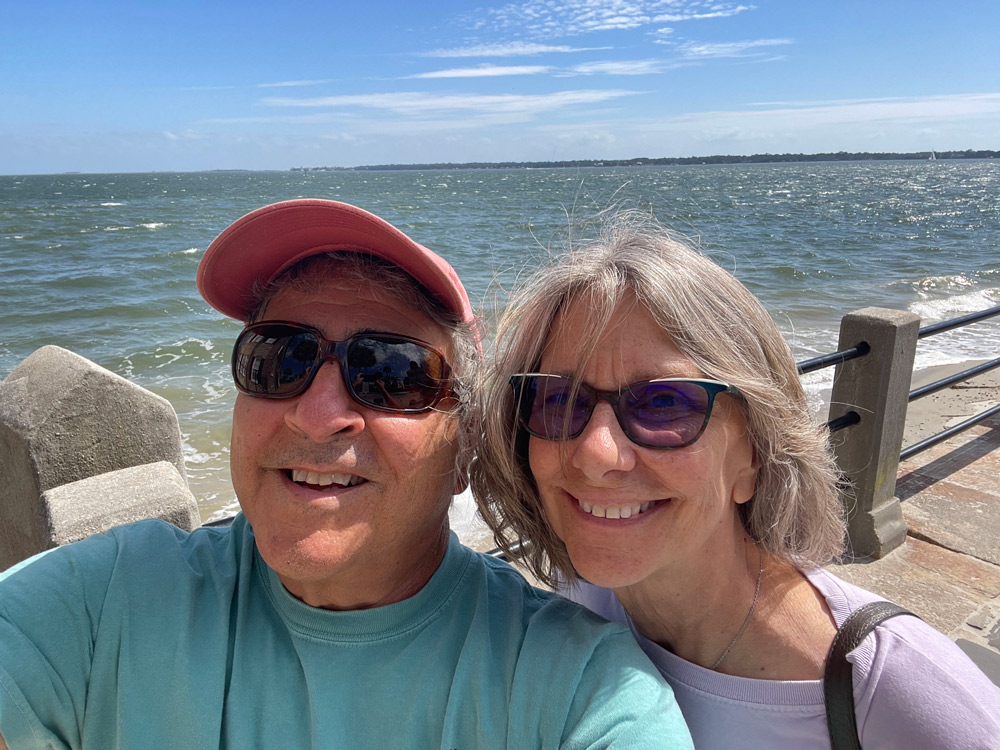
This year, Joe and his wife, Anne, will celebrate their 40th wedding anniversary. They are proud parents to a daughter and a son.
Joe enjoys learning and speaking Spanish. He also does puzzles to exercise his brain as much as possible. He recently became a volunteer hospice worker, doing home visits, and he also helps a friend with his upholstery business.
“I like to be productive,” he says.
Through every step of his cancer journey, Joe says he has felt cared for by his team at Atrium Health. He was so grateful for the support he received that he wrote a letter to the Levine Cancer team to thank them and share his appreciation.
“I’m so impressed with the care I’ve gotten from every single individual at every doctor’s office I’ve visited so far,” says Joe. “They make me feel welcome and important.”
Learn more about lung cancer care at Levine Cancer.


