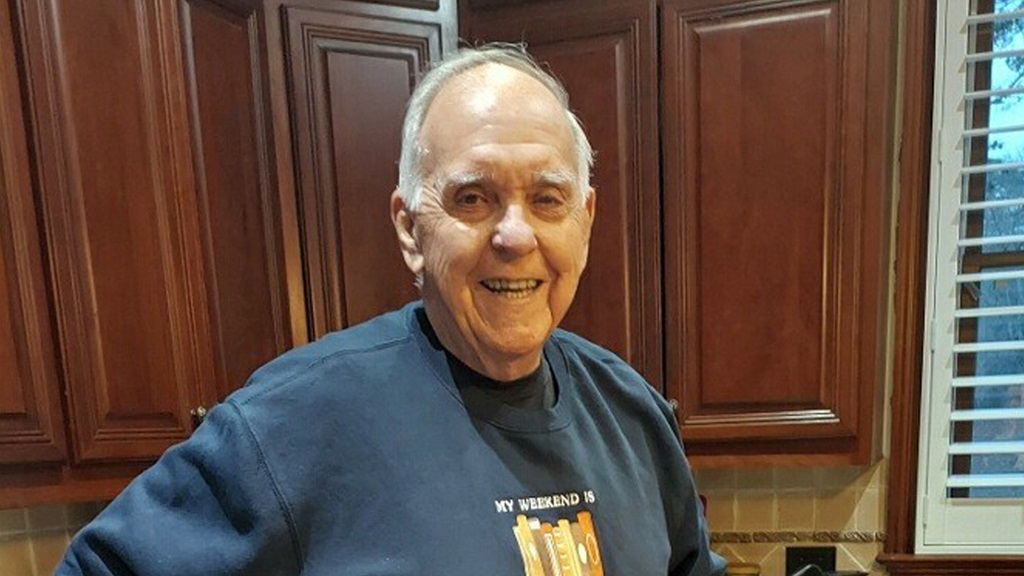
After one stroke, two heart attacks, three cardiac rehab enrollments and four stent placements in the past four years, 83-year-old Selby Moody is ready to ace the next chapter of his life. He credits the Atrium Health Navicent Cardiopulmonary Rehabilitation program for his optimism.
“From the ritual of taking your blood pressure to talking you through various explanations, it’s like a three-month college seminar,” he said of the program.
A retired educator, Moody has taught at the high school, college and military service level, and he has a special appreciation for the educational benefit of the program and the Atrium Health Navicent team that has walked with him over the past four, trying years.
The program, he said, is an all-inclusive education
“I could appreciate the effort that was put in for the educational aspects, from diet and nutrition and to educate patients on what were the causes that brought them into cardiopulmonary rehab,” he said.
And while he has a vocational appreciation for the education he received, Moody said he was equally impressed with the people who provided the education.
“It’s a program where the people have great empathy and caring, plus a smile on their faces when they’re not having to wear a mask,” he said, adding a military flair to his praise. “It is a small quadrant of people, but this group represents the hospital. They deserve a letter of commendation.
“They are so humble and dedicated with every patient. I graduated from the program twice. I had a second chance to experience just the good ol’ Southern charm and hospitality of the Atrium Health Navicent Rehab Center. I am a better person for it today.”
Moody insists his praise is objective
The Atrium Health Navicent Cardiopulmonary Rehab program consists of 36 visits over three months, starting with an initial health and lifestyle inventory that includes questions about eating habits, mental health status and quality of life.
“Cardiac rehabilitation is an intrinsic support group built in where you see patients with your same condition actually exercising, moving and progressing,” said Danielle Hull, cardiopulmonary rehabilitation team leader. “You're in classes together learning about dietary restrictions and healthy eating and healthy lifestyles. The American College of Cardiology recommends that patients who, like Mr. Moody, have undergone percutaneous coronary intervention, attend cardiac rehab. It is a really positive way for patients to encourage themselves and to boost their spirits in terms of physical activity and to gain confidence in their heart and their ability to have an improved quality of life.”
“I really feel empowered. I feel like I’ve been given control,” Moody said. “They do something I think is extremely important. They take you for a six-minute walk during which they are evaluating you before you even start the program.
“This is important because after three months, you’re going to do that same six-minute walk, and there is going to be transparency to let you see with your own eyes how your pulse, your blood pressure and your oxygen rate have improved.”
That kind of measurable validation — including the 30 pounds he has lost — is a confidence booster, and Moody knows why he is seeing results.
He exercises regularly, maintains his own yard, reads food labels and avoids processed foods
“I’ve given up greasy home fried potatoes and greasy bacon and replaced it with stuff that tastes better, looks better and is better for me,” he said.
“I turned 83 years old on Valentine’s Day, and I believe this program is going to add several more years to my life. I’m in better shape mentally and physically. I don’t have a conclusion to my story because the door is still open. That’s because of the changes I have made in my diet and lifestyle, and all the credit goes to Atrium Health Navicent and those four wonderful people in the cardiopulmonary program.”


