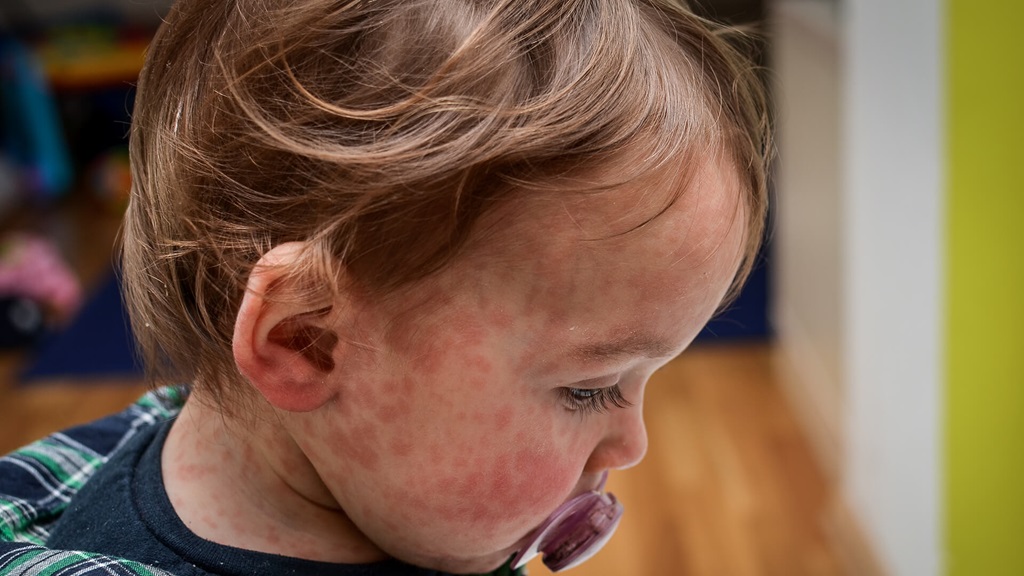
Measles may feel like a childhood illness from decades past, but it remains one of the most contagious viruses known. That is why recognizing the early signs and understanding how it spreads is so important. Dr. Amina Ahmed, chief medical director of pediatric infectious diseases at Atrium Health Levine Children's Hospital, shares what parents should know about this illness and the practical steps that can help prevent further spread.
Top things to know about measles
Measles spreads easily and can lead to serious complications, but simple steps can help protect your family.
- Measles is highly contagious and can linger in the air for up to two hours after an infected person leaves the room
- Early symptoms look like a cold — fever, cough, congestion and red eyes — followed by a distinct rash.
- Staying home when sick, masking and good hand hygiene help protect infants and others who are not immune.
- Vaccination is the best protection. Two doses of the measles, mumps and rubella (MMR) vaccine provide strong, long-lasting immunity.
- If exposed, contact your primary care provider right away to review next steps.
What it is
Measles is a viral illness that spreads easily through the air. Before the measles, mumps and rubella (MMR) vaccine became routine, it was considered a common childhood illness, but it has never been a mild one. Even when children recover, the course of illness can be unpredictable.
“Measles has multiple complications, and some can be very severe,” Ahmed says.
The infection can lead to ear infections, bacterial pneumonia and, in rare cases, serious neurological problems.
“Many children recover, but some develop bacterial infections on top of measles, like ear infections or pneumonia,” Ahmed says. “The most devastating complications are neurological, including inflammation of the brain.”
These neurological issues can appear weeks after infection or, in very rare cases, months to years later. Measles also temporarily weakens the immune system, making children more vulnerable to other illnesses.
How it spreads
Measles spreads through the air when an infected person coughs, sneezes or talks. Breathing in these droplets or touching contaminated surfaces and then your eyes, nose or mouth can lead to infection. Up to 90% of people who are not immune through vaccination can become sick after exposure. People are contagious from four days before to four days after the rash appears.
“This virus can linger in the air and on surfaces for up to two hours after an infected person leaves the room,” emphasizes Ahmed. “That is why it spreads so quickly and why we see cases grow when preventive measures drop.”
Because of how easily it spreads, communities need very high immunity levels to prevent outbreaks. Ahmed notes that more than 95% of the population needs to be protected through the MMR vaccine to effectively stop transmission.
How to prevent it
There are several steps families can take to reduce the spread of measles:
- Stay home when sick
- Wear a mask if you have symptoms
- Practice good hand hygiene
- Avoid large gatherings in areas with known outbreaks
These steps help protect vulnerable children, including infants who are too young to be vaccinated.
Ahmed also notes that vaccination remains the most effective way to prevent infection.
“The most important factor in preventing measles is the vaccine,” Ahmed says. “Decades of data shows that the best thing you can do for your child or loved one to prevent measles is to ensure they are vaccinated.”
Two doses of the MMR vaccine provide about 95% protection. Adults who are unsure of their medical history can talk with their primary care provider about receiving another vaccination. Ahmed reassures there is no harm in getting an additional dose of the MMR vaccine if records are unclear.
What to watch for
The first signs of measles often resemble a common cold: fever, cough, congestion and red or watery eyes. A few days later, an intense rash appears.
The rash usually begins on the head or behind the ears and then spreads downward. It is red, not itchy, and follows a very characteristic pattern. On darker skin, it may look copper colored. Fever can spike as the rash appears, and symptoms may worsen before they begin to improve.
Ahmed explains that as the infection runs its course, the rash typically fades in the same order it appeared.
What to do
If you have been exposed to someone with measles or are in an area with an active outbreak, contact your primary care provider right away.
Your provider will walk through:
- When and where the exposure happened
- Whether your time overlapped with the infected person
- Your vaccination or immunity status
Based on that information, your provider may recommend:
- A dose of the MMR vaccine if needed
- Immune globulin in certain cases (a concentrated dose of antibodies that can help protect someone after exposure)
- Monitoring for symptoms if you are already fully vaccinated
The incubation period can last up to three weeks, so it is important to watch for fever, cough or rash during that time.
Measles is preventable, but cases continue to appear when immunity levels drop. Understanding the symptoms, knowing what to do after an exposure and taking simple preventive steps can help protect your family and community.
“The more people understand how it spreads and what to look for, the better we can protect children and prevent outbreaks,” Ahmed says.
For more information about measles and how to protect your child, contact their pediatrician. Find a Levine Children’s pediatrician near you.


