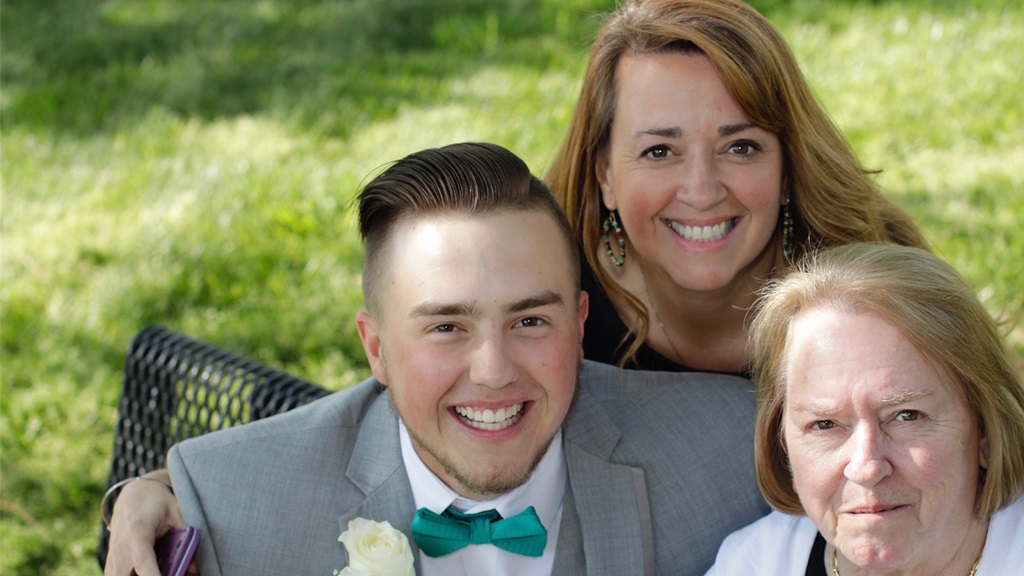
 As a behavioral health nurse and clinical supervisor at Atrium Health Cabarrus, Julia Brown has spent nearly 15 years caring for patients and seeing the value of compassionate mental healthcare. But after a traumatic loss left her struggling with severe anxiety and hypervigilance, recognizing that she needed help for herself took time.
In August 2019, Julia went to her mother’s house for a visit and discovered that she had died.
“As a nurse, I tried to save my mom and then realized she couldn’t be saved,” says Julia. “My mom was my best friend. It was traumatic.”
In the months and years that followed, Julia became increasingly hypervigilant. If her husband or sons didn’t answer their phones right away, she feared something terrible had happened, particularly because her mom hadn’t answered her phone the morning Julia discovered she had passed away.
“I was really trying to control my environment all the time,” she says.
Two years after her mother’s death, her younger son was diagnosed with type 1 diabetes while away at college. Julia could receive alerts when his blood sugar dropped and the uncertainty intensified her anxiety. At one point, her husband and sons began telling her when they were getting in the shower so she wouldn’t panic if they didn’t answer their phones.
After one blood sugar alert led Julia to fear the worst, even though her son was asleep and ultimately fine, she realized how much her anxiety was affecting her and her family.
She had been in therapy for years, but the hypervigilance persisted.
“I thought my symptoms were related to grief, not trauma,” she says. “I’ve accepted that my mom is gone, but this is something else.&rdquo
Eventually, she reached out to Dr. Jonathan McKinsey, a psychiatrist she had worked with for years at Atrium Health Cabarrus.
“I just broke down,” she says. “I called John and said, ‘What do I do? I’ve got to fix this.’”
A different approach to PTSD treatment
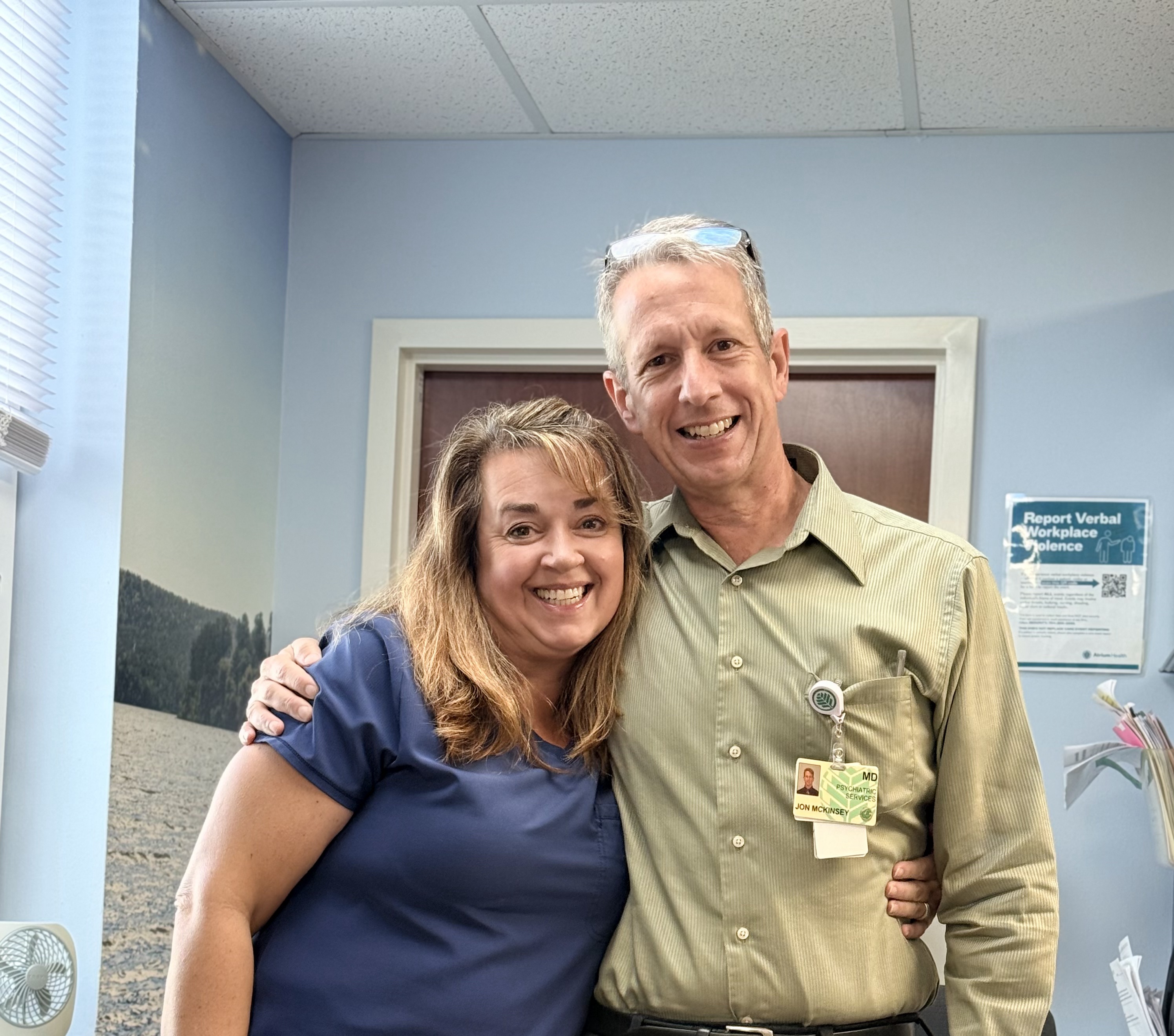
McKinsey connected Julia with a social worker, who referred her for an innovative new treatment option for post-traumatic stress disorder (PTSD). Julia met with Dr. Oleg V. Tcheremissine, a psychiatrist at Atrium Health Behavioral Health Charlotte, to discuss her symptoms and treatment options. Because disrupted sleep was also affecting how she felt, Tcheremissine addressed that separately with medication. He also told her she was a good candidate for PRISM, a digital trauma therapy.
PRISM is an FDA-cleared prescription neurofeedback treatment used as part of an overall PTSD treatment plan. During a session, a patient wears a noninvasive electroencephalogram (EEG) headset that measures brain activity while watching a computer simulation filled with animated characters. The patient practices personalized mental strategies and the simulation changes in real time based on feedback from the EEG signals.
The goal is to help patients learn strategies they can use to better regulate their responses to stress. The sessions don’t require patients to recount or directly revisit the traumatic event.
“With PRISM, you only work on your mental strategies,” says Tcheremissine. “You don’t have to re-examine traumatic events.”
Julia was prescribed eight sessions and began treatment in April. She was skeptical at first.
“The video’s avatars are at a waiting room desk wanting attention and the video tells you to use certain emotional strategies to get them to sit down,” says Julia. “I was very skeptical at first. I was like, there’s no way my brain is going to make these people sit down.”
During treatment, Julia experimented with strategies that helped her feel calm and grounded. She thought about happy memories with her sons, including their graduations and accomplishments. Prayer, breathing exercises and memories of running also helped.
The sessions also taught her what happened when her attention drifted toward distressing thoughts. If a memory led her back to her mother’s death, she learned to redirect her focus and return to a strategy that helped her regulate her emotions.
“You have to practice these skills outside of the office,” says Tcheremissine. “We can tell you which strategies work best for you based on the results of your session.”
PRISM can also be used alongside other PTSD treatments.
“This is an add-on, not a replacement for other treatment,” says Tcheremissine. “It’s focused on building resiliency and self-control. It provides us with another tool for self-regulation.”
Julia is grateful for the care she received from Tcheremissine.
“Dr. Tcheremissine was amazing and so patient,” she says. “He believed in me, encouraged me and was available if I needed anything.”
Learning to respond differently
 For Julia, the difference became clear during a recent anniversary of her mother’s death. While she and her husband were driving home from a vacation, her son’s blood sugar alarm went off. In the past, Julia says she would have immediately feared he was in danger and called him.
This time, she waited and watched. His blood sugar came back up without her needing to contact him.
“My husband was so proud of me,” she says.
“I went to my ‘happy place,’” she says. “I was like, ‘This is OK. I’ve got this. If his blood sugar goes down more, I’ll call him.”
Julia says she didn’t experience side effects from treatment. Atrium Health notes that some patients may experience mild headache, dizziness or fatigue, which typically resolve after a session.
Her results have been life-changing.
“I thought that this was how it was going to be from now on,” she says. “I thought I was forever broken.”
Today, she describes a very different day-to-day experience.
“I don’t have to control everything anymore,” she says. “I can rest. I can sleep. I can relax. I’m not reactive like I was before. I can allow things to happen. And just because I don’t react immediately doesn’t mean something terrible is going to happen.”
She hopes being open about her experience can help reduce some of the stigma surrounding behavioral health and remind others that healthcare professionals sometimes need support too.
Julia says she is also deeply grateful for the support she has received from her family and from her leaders and teammates at Atrium Health Cabarrus, who stood by her throughout her healing journey. “It means everything to work in an environment where your leaders and teammates don’t hesitate to show up for you,” says Julia. “My family and my Atrium Health Cabarrus team have supported me unconditionally, and I’m so thankful for the care, encouragement and grace they’ve given me through this.”
For Julia, moving forward also includes fulfilling a promise she made to her mother. The night before her mother died, they talked about Julia pursuing a master’s degree so she could consider a future nurse manager role. Her mother encouraged her to do it and promised to help her balance school and family.
Julia stepped back from the idea after her loss. Now, seven years later, she’s working toward that master’s degree.
Even if she never becomes a nurse manager, she says the degree matters because it’s a promise to her mom she intends to keep.
Learn more about digital trauma therapy at Atrium Health.


