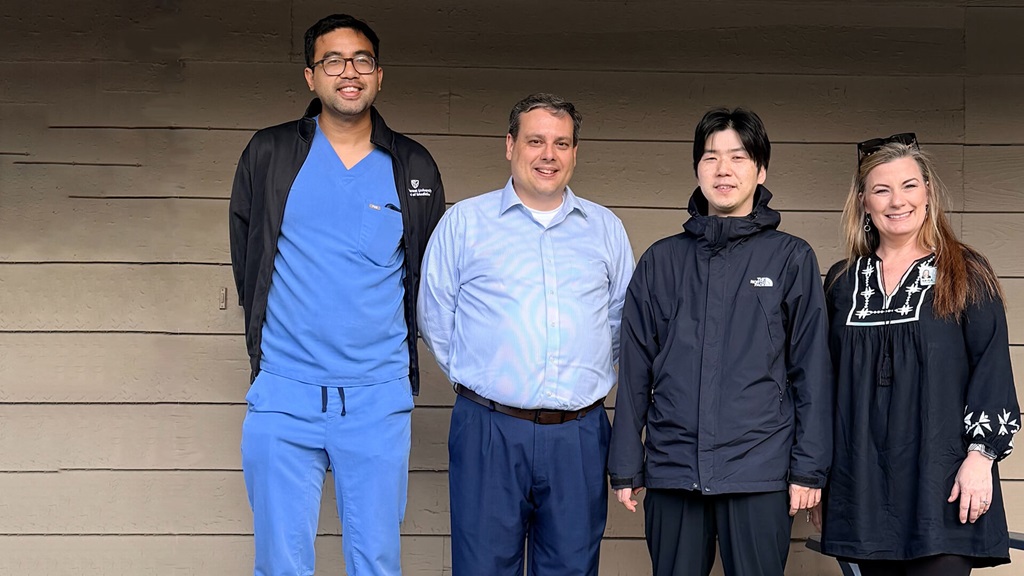

As a hematologist-oncologist in Sapporo, Japan, Dr. Yusuke Sugama has long believed that cancer care is about more than treating the disease. It is also about caring for the whole person during one of life’s most difficult times.
That belief became even stronger during his observership in the Department of Supportive Oncology at Atrium Health Levine Cancer. One idea, he says, stood out above all: “Kindness is universal.”
Sugama came to Levine Cancer to see how supportive oncology is woven into everyday cancer care. Levine Cancer was a natural place to learn; in 2017, it became the first cancer program in the nation to create a department dedicated to multidisciplinary supportive oncology. The approach helps patients manage symptoms and treatment side effects, supports emotional well-being, includes family and caregivers, and improves quality of life during and after treatment.
His visit was part of Atrium Health’s international observership program, which began in 2023 through Global Healthcare Services. The program gives healthcare professionals from other countries the opportunity to observe care at Atrium Health facilities, share ideas and bring new insights back to their own communities.
“Each international physician observer experience offers an opportunity for the exchange of ideas and diversity of thought and practice in global healthcare delivery, which is invaluable,” says Diane Lynn, associate vice president of Global Healthcare Services at Atrium Health.
What is supportive oncology?
Supportive oncology is care that helps people feel and function as well as possible during and after cancer treatment.
At Atrium Health Levine Cancer, the Department of Supportive Oncology brings together many services that can help reduce symptoms, ease treatment side effects and improve quality of life. These services work alongside a patient’s main cancer care team and can support physical, emotional, spiritual and caregiver needs.
“Supportive oncology focuses on improving quality of life for people with cancer by addressing symptoms, stressors and practical challenges that can arise during treatment,” says Dr. Anthony Caprio, vice chair of the Department of Supportive Oncology at Levine Cancer.
For patients and families, this may include help with pain, nausea, fatigue, anxiety, coping, communication, financial concerns, family needs and overall well-being.
Supportive oncology services at Levine Cancer include:
- Acupuncture
- Cancer rehabilitation
- Cancer Survivorship Clinic
- Deep relaxation and mindfulness classes
- Healing touch
- Music therapy
- Nutrition services
- Oncology massage therapy
- Palliative medicine
- Patient navigation
- Psycho-oncology care
- Senior oncology for adults 65+
- Spiritual care
- Support groups
- Tai chi
- Therapeutic art
- Writing community
- Yoga
Why Sugama came to Levine Cancer
For Sugama, the visit was both personal and professional.
He chose oncology because he wanted to help people facing cancer. In his work, he sees how cancer treatment can affect not only a person’s health, but also their daily life, emotions, family and sense of well-being.
“During my medical training, I developed a strong desire to help people suffering from cancer, which led me to pursue a career in oncology,” he says. “As I administered chemotherapy, I realized that supportive care is deeply connected to a patient’s quality of life. I participated in this program because I was highly interested in seeing how supportive care is systematized in the United States.”
Sugama was interested in learning more about supportive oncology, which is less common in Japan than in the United States. He also wanted to better understand the roles of nurse practitioners and chaplains, which can be less common or organized differently in Japan.
At Levine Cancer, he saw supportive care included as a regular part of cancer care, rather than something separate. He observed how different specialists work together to support patients and families. He also saw how tools such as telehealth, virtual consultations and real-time communication through the electronic medical record can help teams coordinate care more efficiently.
“The roles here are much more specialized than in Japan,” he says. “It was striking to see doctors and nurses working together in pairs, which is something we do not typically see in Japan.”
“International exchange allows clinicians to learn from different healthcare systems and cultural perspectives on supportive care,” says Caprio. “By observing real-world clinical practice, visiting physicians can gain practical insights into how supportive oncology is integrated into cancer care and consider how similar principles might be adapted within their own institutions.”
For Levine Cancer, the program is also a way to learn from healthcare professionals around the world and continue improving care for patients and families.
Bringing lessons back to patients in Japan
Sugama says partnerships across countries are important because cancer care affects people everywhere.
“International partnerships are crucial because they help ensure that we can provide optimal medical care to all cancer patients, transcending borders, regions and ethnicities,” he says.
Sugama’s experience at Levine Cancer reaffirmed his belief in caring for the whole person, not just treating the disease. It also gave him ideas for making care at his hospital more coordinated, efficient and supportive for patients.
“Observing supportive care at Levine Cancer, a global leader in medicine, has truly broadened my horizons,” he says. “I also made many wonderful friends, and I hope to stay in touch with them in the future. I highly recommend this observership to medical oncologists, palliative care physicians and anyone aspiring to enter these fields.”
The future of the global observership program
Lynn says Global Healthcare Services sees opportunities to grow the observership program so more types of healthcare professionals, including nurses, technicians and therapists, can take part.
“The globalization of healthcare has opened up new innovations in care delivery that should be exchanged to improve health internationally,” she says. “Over the past decade, we’ve come to understand through global medical events that we are inextricably linked and must work together for a healthier world.”
Learn more about supportive oncology at Levine Cancer and Global Healthcare Services at Atrium Health.


