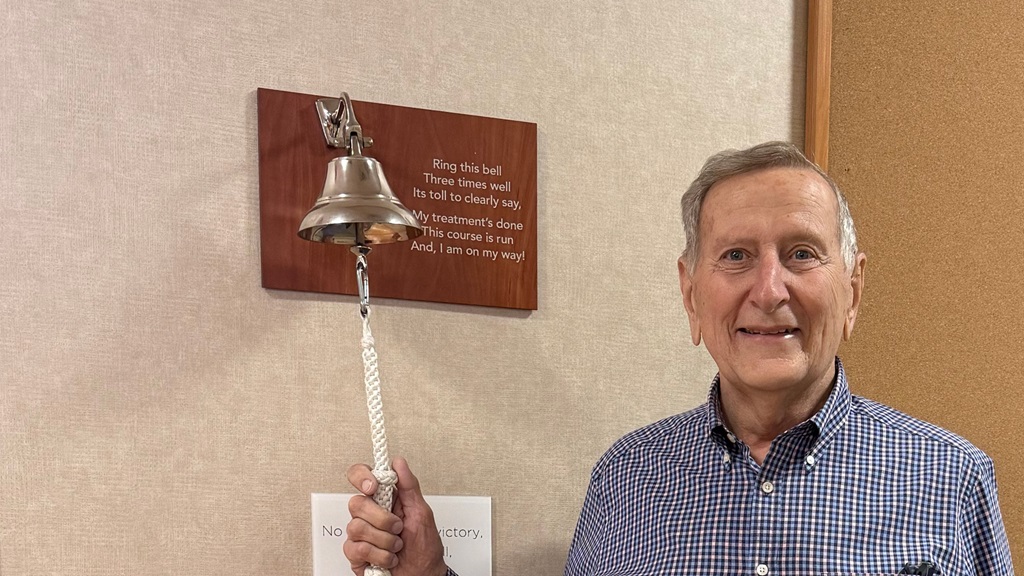
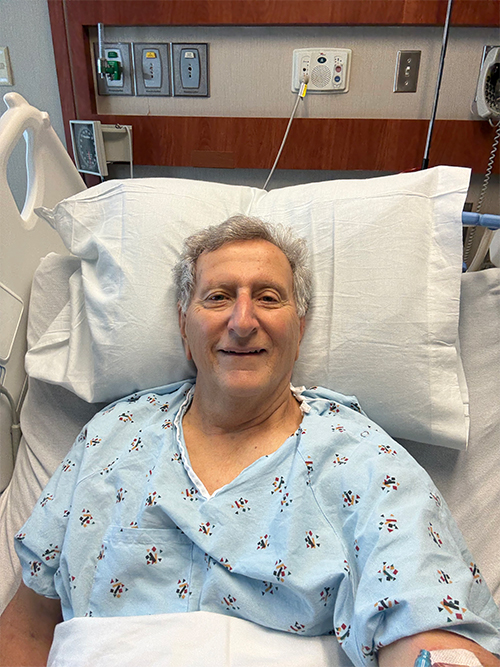
On July 4, 2025, Bob Egiziano’s wife Hilda noticed a change that would prove lifesaving.
“My wife looked at me and said, ‘Your eyes are yellow,’” he says.
“I’d worked for Philip’s Healthcare for 35 years and I know what jaundice looks like,” he says. “I immediately went to the emergency room for testing, which showed my bilirubin was very high.”
The next day, an endoscopy revealed a small tumor in the head of the pancreas. The tumor was blocking his bile duct, causing bilirubin to build up and turn his eyes yellow. A gastroenterologist placed a stent to relieve the blockage.
Most importantly, the tumor appeared to be localized and could be surgically removed. Pancreatic cancer is often diagnosed only after it has spread or grown around structures that make surgery impossible. Because Bob’s cancer was caught early stage, his care team had the opportunity to pursue treatment with the goal of a cure.
Before Bob could undergo surgery, however, he developed a bacterial infection after the stent was placed. Bob’s infection was successfully treated by the infectious disease team at Atrium Health, and he completed six and a half weeks of antibiotic infusions.
Building strength with the Senior Oncology Clinic
While he recovered from the infection, Bob met with Dr. Armida Parala-Metz in the Senior Oncology Clinic within Atrium Health Levine Cancer’s Department of Supportive Oncology. As an oncogeriatrician and palliative medicine physician, she helps older adults with cancer maintain their health, independence, and quality of life during treatment.
The clinic evaluated more than Bob’s cancer diagnosis. The team assessed his physical condition, nutrition and ability to recover from a major operation. Although he was still regaining his strength, his motivation and resilience made him an excellent candidate for prehabilitation (prehab), a program that helps patients get stronger before surgery to support recovery.
The team created a personalized exercise plan, arranged weekly calls with a nurse and connected Bob with a registered dietitian who helped him increase his protein intake before surgery.
“Dr. Parala-Metz played a major role in helping me understand what I needed to do to prepare myself for the surgery,” he says. “I’m a disciplined person, so I did what she told me to do, including exercises and getting more protein in my diet.”
His work paid off. Bob says prehab gave him the strength to get out of bed the day after surgery, an important early step in his recovery.
Undergoing a robotic Whipple procedure
 Dr. John Martinie, a hepatobiliary surgeon at Levine Cancer, performed Bob’s Whipple procedure robotically. The surgery removes the head of the pancreas and nearby structures, then reconnects the digestive system. Although the robotic approach uses small incisions, it is still a major operation.
“Even though I’m doing it through small incisions, physiologically, it takes a toll,” says Martinie.
Because recovery from surgery can become more difficult with age, Martinie recommends that older patients meet with the Senior Oncology Clinic to address concerns that could affect their strength, nutrition and readiness for treatment.
The surgery was successful and possible because Bob’s cancer was found early enough to remove. Jaundice can be an early sign of pancreatic cancer when a tumor blocks the bile duct. Other possible signs include dark urine and light or clay-colored stools.
“The jaundice saved my life,” says Bob. “The cancer was found early, which is highly unusual. Most pancreatic cancer cases are found at stage III or IV, where you can do treatment, but you can’t cure the patient.”
Multidisciplinary support through every stage of treatment
The Senior Oncology Clinic continued to support Bob after surgery as he completed six months of chemotherapy and 28 radiation therapy treatments.
“Our team provided comprehensive symptom management throughout his cancer treatment,” says Parala-Metz. “We addressed common issues such as nausea, vomiting, diarrhea, fatigue, dehydration, and anxiety or mood changes. By proactively managing these symptoms, our goal was to help Bob maintain his quality of life, stay on track with treatment, and reduce the risk of emergency department visits or hospitalizations.”
“I was willing to take all the help I could get,” says Bob.
He describes the support from his care team as “fundamental to where I am today.”
“I’m amazed at all the surgeons, doctors and staff I’ve interacted with,” he says. “They know my history extremely well. It’s amazing the level of care I’ve gotten at Atrium Health Main and Levine Cancer.”
Looking forward with family by his side
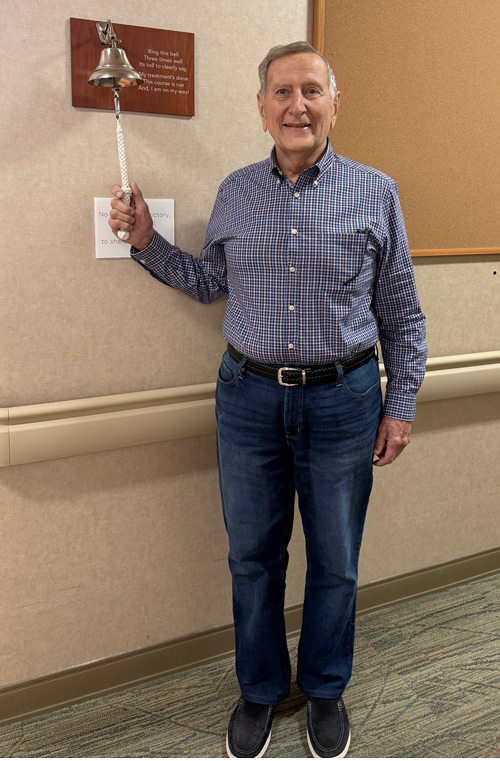
Bob’s care team considers his cancer curable. His journey has included surgery, months of treatment and three hospital stays, but he has faced it with determination and with Hilda beside him.
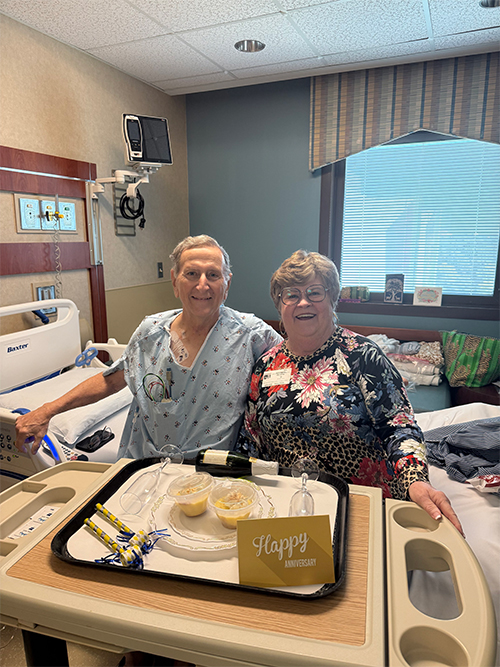
When one hospital stay coincided with their 54th wedding anniversary, members of the food service team helped celebrate their milestone.
“The food service team brought in a small cake and a little champagne,” he says. “I thought that was really classy of them to do that.”
At home, Bob enjoys playing golf, participating in his church, cheering for West Virginia University and taking his 5-year-old granddaughter for rides on the family’s pontoon boat.
“I don’t sit around much,” he says.
“Bob was incredibly motivated and understood what he needed to do to support his recovery,” says Parala-Metz. “Just as importantly, he and Hilda were a strong team, with Hilda’s unwavering support helping him through recovery.”
“I have been at peace since day one of this journey,” says Bob.
Learn more about senior oncology care at Levine Cancer.


