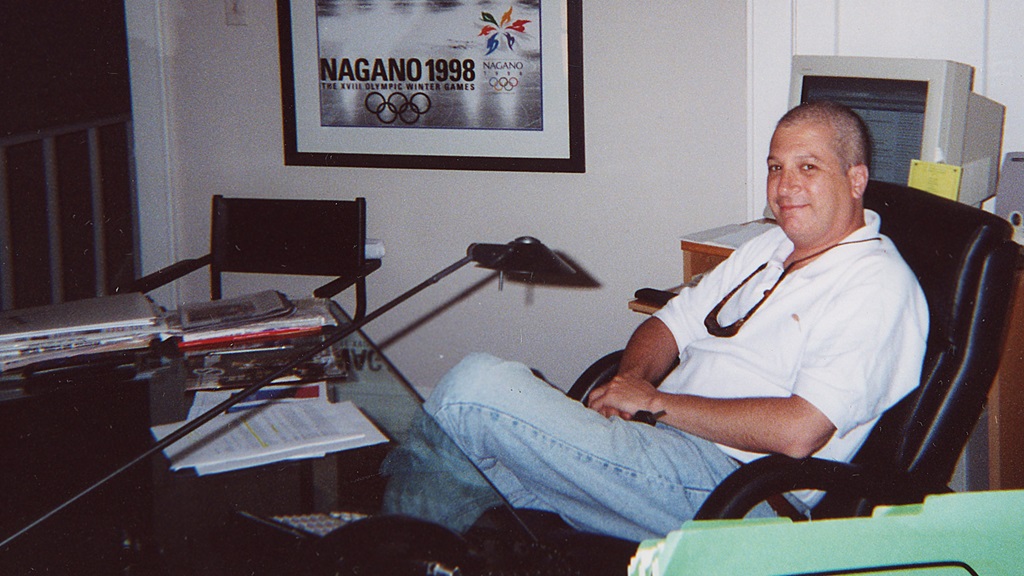
 In 2001, Mike Burg’s career was moving at full speed. An executive producer in the entertainment industry, he was based in Charlotte and regularly traveled to Los Angeles to produce shows, including the Kids’ Choice Awards and Teen Choice Awards.
Then he noticed swelling on the left side of his chest.
At first, his doctor suspected arthritis in his ribs or an infection. X-rays didn’t show anything unusual, but Mike’s symptoms continued to worsen. When he later developed itching under his arms, he underwent a CT scan.
Mike was in Virginia Beach producing a concert for Fox when his doctor called with the results.
“He said, ‘You need to come back right away. We need you to see an oncologist,’” says Mike.
Mike immediately returned to Charlotte.
“I’d been commuting back and forth, creating shows in LA and everything was riding high,” he says. “Then, boom, this happened.”
Facing a Hodgkin lymphoma diagnosis
The next day, Mike met with Dr. John Mahoney, a now-retired hematologist and oncologist at Atrium Health Levine Cancer. A biopsy showed that Mike had stage III Hodgkin lymphoma, a form of cancer that affects the white blood cells that are part of the immune system. Stage III means lymphoma is present in lymph nodes on both sides of the diaphragm or in the spleen.
“Dr. Mahoney was great,” says Mike. “He was very upfront and told me it was treatable.”
Mike began chemotherapy and radiation therapy. He tried to keep working and traveling through treatment, but eventually the side effects made maintaining his usual pace difficult.
“It’s like you have the flu without the fever,” he says.
Later, when Mike’s lymphoma returned, his care team was by his side every step of the way, connecting him with the specialized care he needed for an autologous stem cell transplant, which uses a patient’s own blood-forming stem cells. After the transplant, he returned to Charlotte, where Mahoney continued to oversee his follow-up care in coordination with the transplant team.
Managing the long-term effects of treatment
Mike’s medical team had warned him that radiation to his chest could increase his risk of heart problems later in life. In 2010, he had a heart attack and was treated at Atrium Health Sanger Heart & Vascular Institute, where interventional cardiologist Dr. Michael Rinaldi performed cardiac catheterization and stenting.
“Luckily, I caught it,” says Mike. “Dr. Rinaldi saved my life.”
Long-term follow-up is especially important for people who received chest radiation because treatment can increase the risk of heart disease years later. Dr. Ryan Jacobs, a lymphoma specialist at Levine Cancer who has also led research in this field, says that’s one reason patients are connected with survivorship care after lymphoma treatment.
“They’re with providers who understand what to look for,” he says.
Mike remains grateful for the team that cared for him through cancer treatment and its aftermath.
“It was a really positive team approach,” he says. “They were always encouraging and honest and it was a well-rounded team who worked together. If I had any issues, they were always there.”
Turning cancer survivorship into advocacy
Mike’s cancer experience also changed the way he approached his work.
In the years after treatment, he partnered with organizations including the National Coalition for Cancer Survivorship (now Cancer Nation), the American Society of Clinical Oncology and The Leukemia & Lymphoma Society (now Blood Cancer United) on entertainment projects designed to raise awareness about cancer and survivorship.
Among them were Frosted Pink and Frosted Pink with a Twist, televised specials that paired figure skating and gymnastics with cancer education and survivorship messaging. He ultimately produced six network television events focused on those themes. He also helped create Cancer Bites, a blood cancer awareness initiative promoted by actor Robert Pattinson.
For Mike, using his professional platform to support cancer education became an important extension of his own experience as a patient and survivor.
Hodgkin lymphoma treatment continues to advance
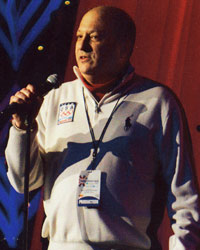
Treatment for Hodgkin lymphoma has changed considerably since Mike was diagnosed in 2001.
Jacobs was among the investigators involved in a large phase 3 clinical trial that helped establish a newer first-line treatment approach for advanced classic Hodgkin lymphoma.
“The standard of care used to be chemotherapy alone, but now we use a combination of immunotherapy with chemotherapy,” says Jacobs. “That’s led to better outcomes and it’s better tolerated.”
Most people diagnosed with classic Hodgkin lymphoma can be cured, including many with advanced disease, he adds.Hodgkin lymphoma is relatively uncommon and its symptoms can overlap with many other conditions. Possible signs include enlarged lymph nodes, unexplained weight loss, drenching night sweats, chest pain or pressure and itching. Having these symptoms doesn’t mean someone has lymphoma, but persistent or unexplained changes should be evaluated by a health care provider.
Lessons Mike carries with him
Twenty-five years after his diagnosis, Mike now lives in Southern California and continues to produce award shows, sports specials and other live television projects.
He also has practical advice for anyone facing cancer or another serious diagnosis: Bring someone you trust to important appointments so they can listen, take notes and help you remember what was discussed. Ask questions and don’t hesitate to seek a second opinion when you need one.
His experience taught him the value of being an active participant in his care and of having a medical team he could trust through treatment, recurrence and survivorship.
Learn more about Hodgkin lymphoma care at Levine Cancer.


